Ikebana Iwaya Fund is committed to promote and support ikebana related activities. We foster interactions among multiple ikebana organizations, and the dissemination of ikebana to the public at large.

Independent Non-profit IRS 501 (c )(3)

The Iwaya Fund is an independent non-profit that serves as a vehicle for donations to any donor-designated Ikebana International chapter, ikebana schools, study groups, or related organizations. Financial support is provided by public donations and by dividends from the Endowment Fund. The Iwaya Fund, established in 2006, has no paid employees and is staffed solely by volunteers.

Our Donors
As a non-profit, the Iwaya Fund is dependent on public funds. All donations to the Iwaya Fund, either designated or undesignated, are tax deductible [IRS 501(c)3]. Designated donations are accepted for ikebana organizations such as Ikebana International Chapters, ikebana study groups, or ikebana conferences. Iwaya forwards one hundred percent of the designated funds.

Our Endowment
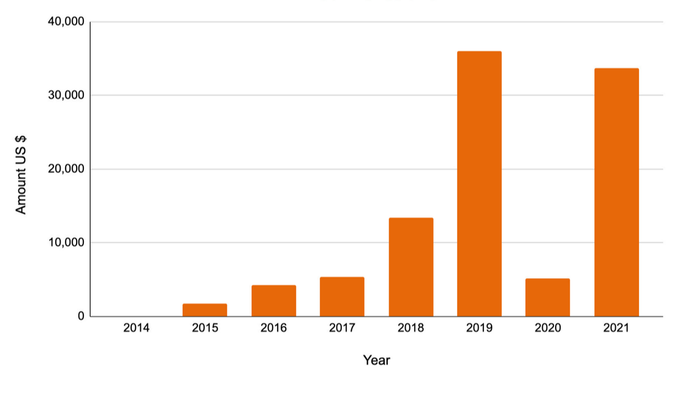
The Iwaya Fund established an Endowment component in 2014, as part of the vision and generosity of Sumako Iwaya Solenberger. The Endowment has grown 15-fold over seven years since its inception. The dividends that the Endowment Fund generates annually are entirely disbursed to the ikebana community.
The Legacy of Sumako Iwaya
Founder Sumako Iwaya was already a lover of nature before she met John Solenberger in Japan through their work at the Dupont Corporation. Marrying and creating a home in the Delaware Valley, they transformed their steep, unique property into an award-winning garden collaborating with the premier Longwood Garden in Philadelphia who utilized it for education and training. Sumako’s love of garden design and art expanded when she was introduced to ikebana by studying with Sogetsu teacher, Midori Tanimune.
Subsequently, Sumako became a member of I.I. Philadelphia Chapter #71, and in her capacity as Chair of the Ways and Means, she saw how fundraising was a key component to providing excellent programming for I.I. chapters. While on holiday, Sumako learned about a joint relationship between a New Zealand wildlife organization and a U.S. not-for-profit organization which made it possible for people to make donations to the New Zealand group and also benefit from a U.S. tax deduction. She and her husband, John, saw how this could be applied to ikebana in the U.S. and agreed to commit a portion of their finances to making a similar “giving” structure for ikebana. They established a nonprofit to support all Ikebana International Chapters in 2009.
After Sumako passed away in 2013, John decided to further ensure her legacy by establishing an endowment component within the original (2009) nonprofit and renamed it Ikebana Iwaya Fund in 2014. With this endowment,Ikebana Iwaya supplements the public donations it receives to disburse as grants. The investments of the endowment generate dividends which will continue to support ikebana activities in perpetuity.